[Thunder & Lightnings]
[Buccaneer]
[Gannet]
[Gnat]
[Hunter]
[Javelin]
[Lightning]
[Phantom]
[Scimitar]
[Sea Hawk]
[Sea Vixen]
[Swift]
[TSR.2]
[Valiant]
[Victor]
[Vulcan]
[Airfield Viewing Guide]
[Links]
[Forum]
| HAWKER HUNTER |
| PICTURES - FUSELAGE |
[History]
[Survivors & Leading Particulars]
[Pictures]
[References & Credits]
This page last updated on 29th February 2004
[Survivors 1]
[Survivors 2]
[Survivors 3]
[Survivors 4]
[Survivors 5]
[Survivors 6]
[Survivors 7]
[Survivors 8]
[Survivors 9]
[Survivors 10]
[Survivors 11]
[Survivors 12]
[Survivors 13]
[Survivors 14]
[Survivors 15]
[Survivors 16]
[Survivors 17]
[Survivors 18]
[Survivors 19]
[Survivors 20]
[Survivors 21]
[Gallery 1]
[Gallery 2]
[Gallery 3]
[Gallery 4]
[Cockpit]
[Fuselage]
[Wings]
[Undercarriage]
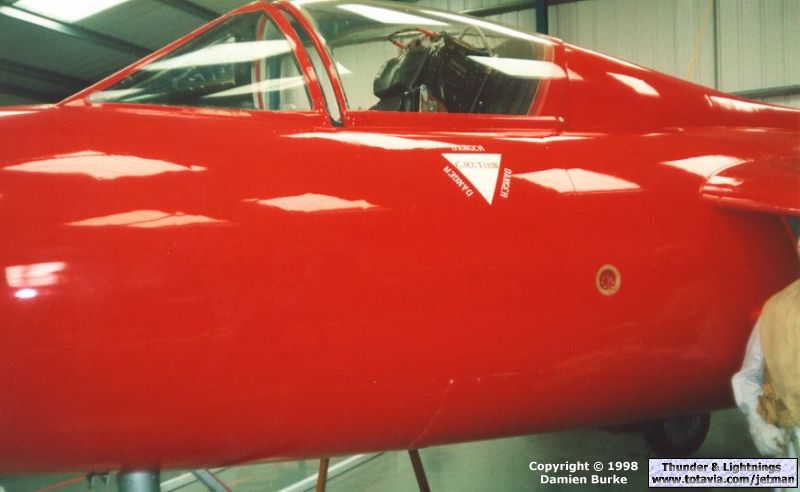
- P.1067 WB188 at Tangmere. The prototype, and converted to F.3 standard, this is the
aircraft that Neville Duke used to set a world speed record in. It retains its paint scheme
from that day and has a different canopy to normal single seaters.
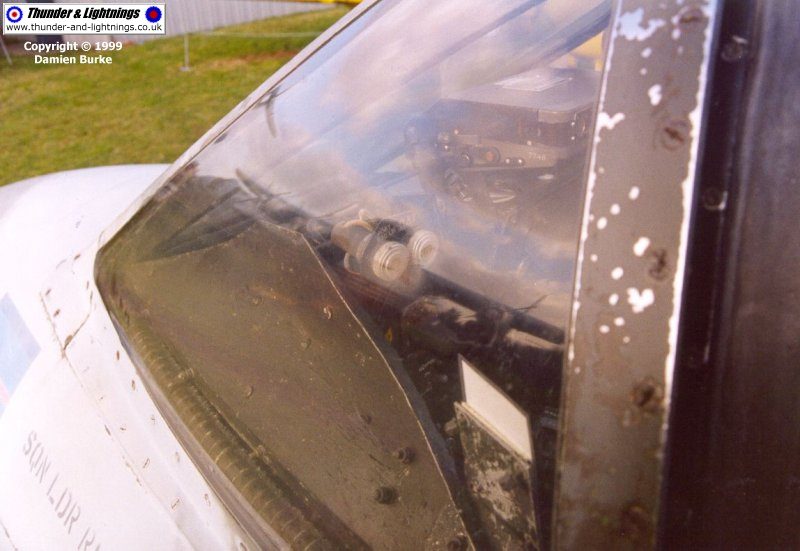
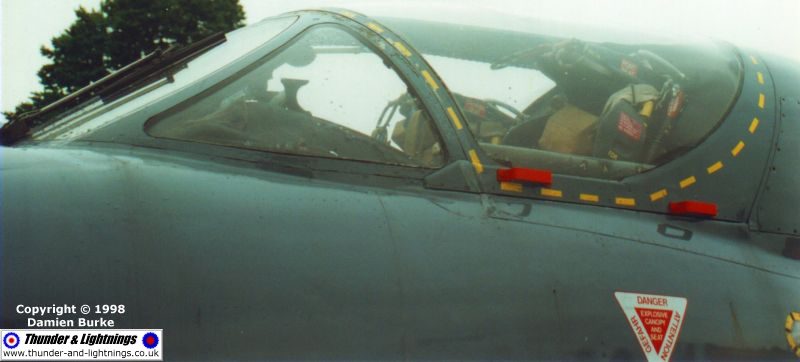
- T.7 XL587 at Duxford. Standard two-seater cockpit canopy, but the grab handles aren't
usually there.
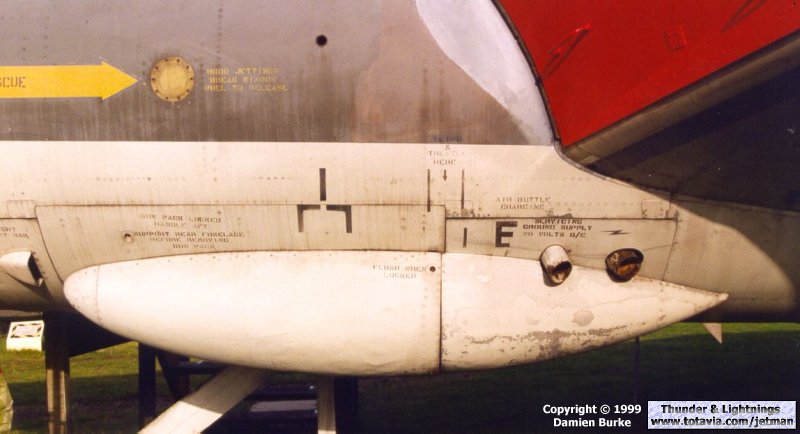
- F.6A XF832 at Coventry. These large fairings, known as Sabrinas after a 1950s pinup who also boasted a pair of curvy objects,
collect used links from the cannon's ammunition belts. The two pipes towards the rear are where used
cartridge cases are ejected.
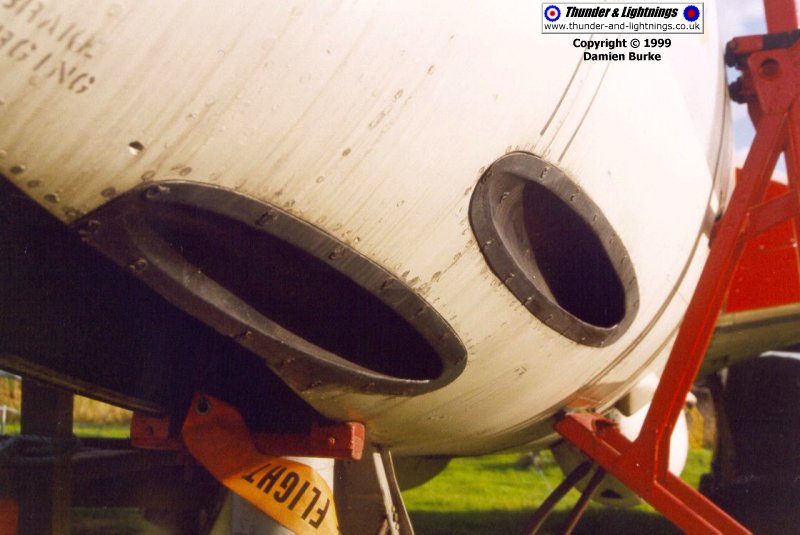
- These are the port side cannon ports; red boarding ladder in the background.
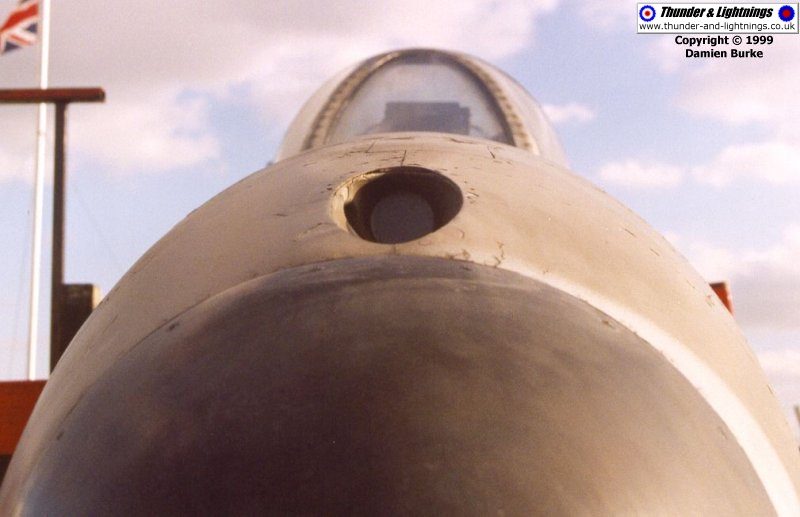
- In the top of the nose is what at first sight is an intake. In fact it leads to the gun camera,
but look more carefully at the starboard side of the tunnel - yes, there's a little intake there,
part of a ram air cooling system for the radar.
- Behind this window is an F.95 strike camera similar to those fitted to first generation Harriers.
- FGA.9 XG154 at Hendon. RAF Hunters differed from Swiss ones in usually having simple gun ports and
different 'Sabrina' cannon link collector fairings; Swiss examples had boxy bits around the guns
and chaff/flare dispensers built into the sabrinas.
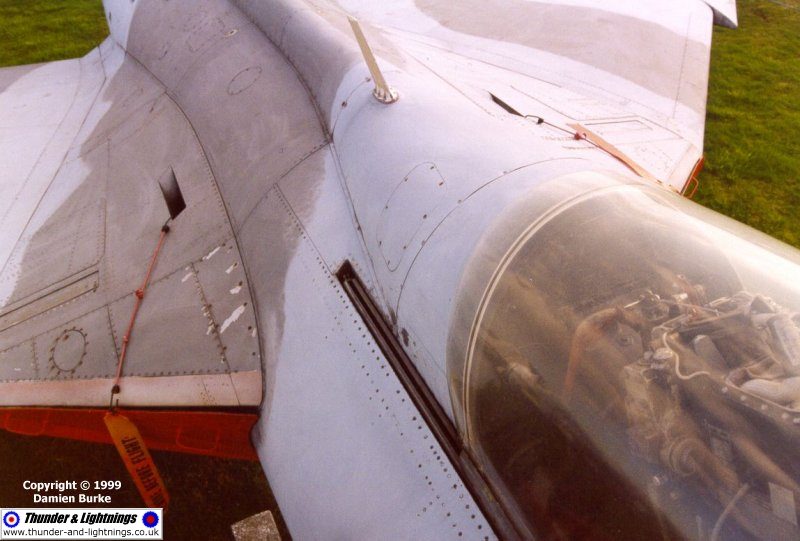
- XF382 again; view from the starboard cockpit side looking back. The canopy rail grooves are very obvious as is the
white communications aerial and the intake boundary layer dumps (here used to help keep the intake covers on!).
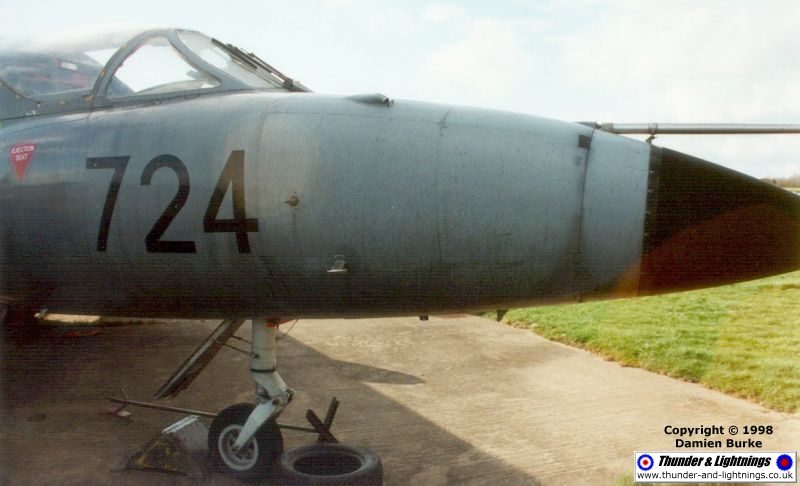
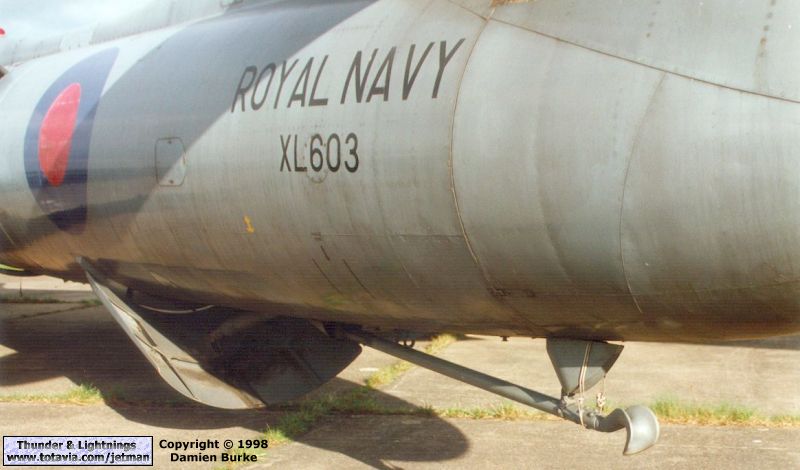
- T.8M XL603 at Bruntingthorpe. A T.8 modified with a Sea Harrier nose and appropriate
changes in the cockpit - the Hunter seems to have a habit of pretending to be other aircraft!
The various bits sticking out of the nose are only seen on T.8Ms (and SHARs!). The brighter
circle by the '4' is sun glare, not part of the paint scheme.
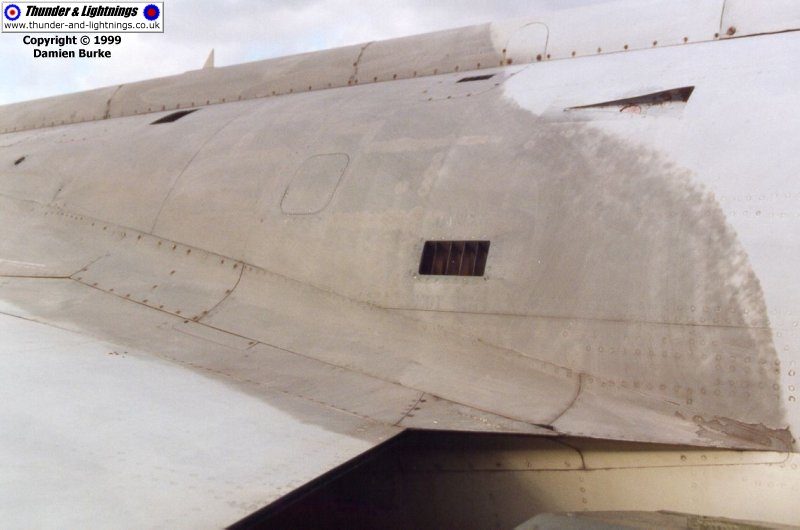
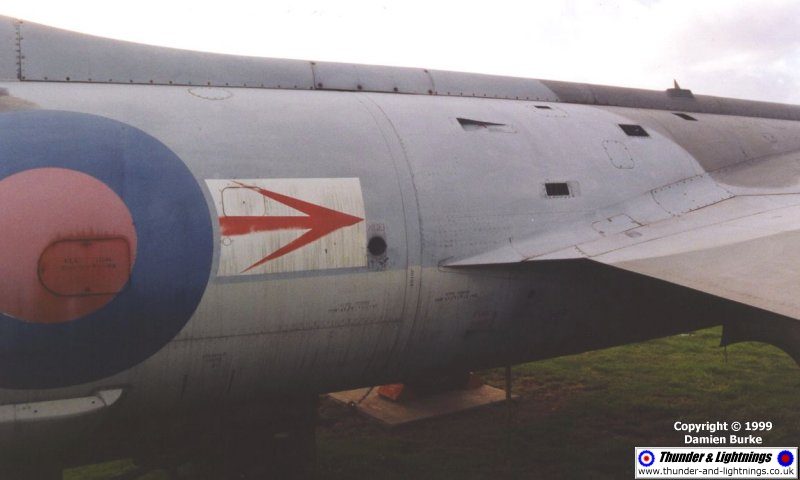
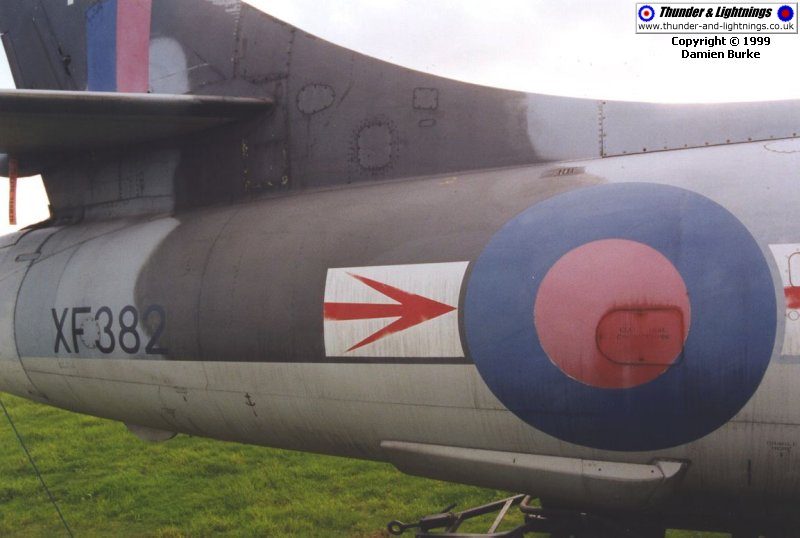
- View of the port mid fuselage area on XF382.
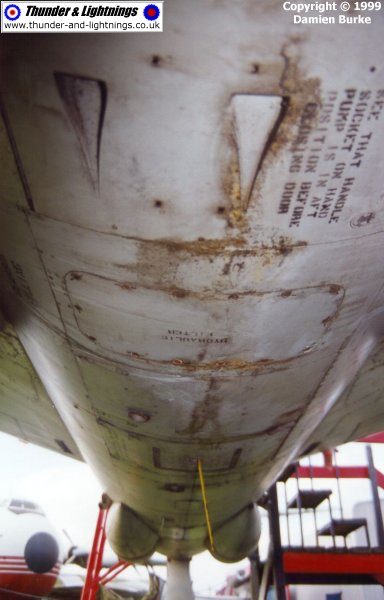
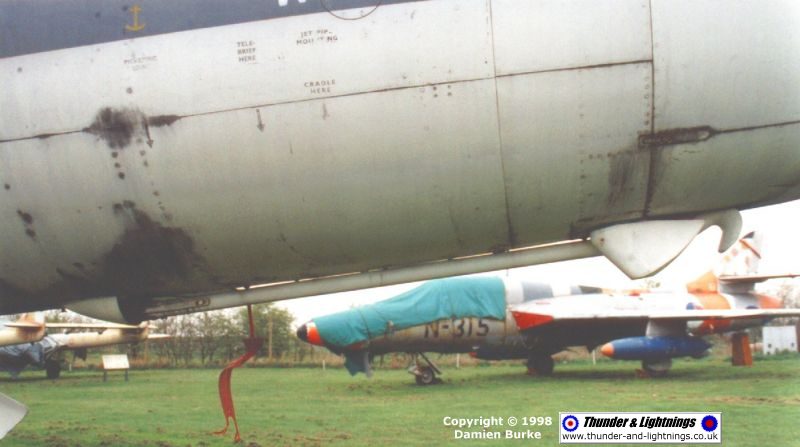
- General view underneath the fuselage - what looks like corrosion is accumulated hydraulic and engine oil,
which is somewhat difficult to shift, I am reliably informed.
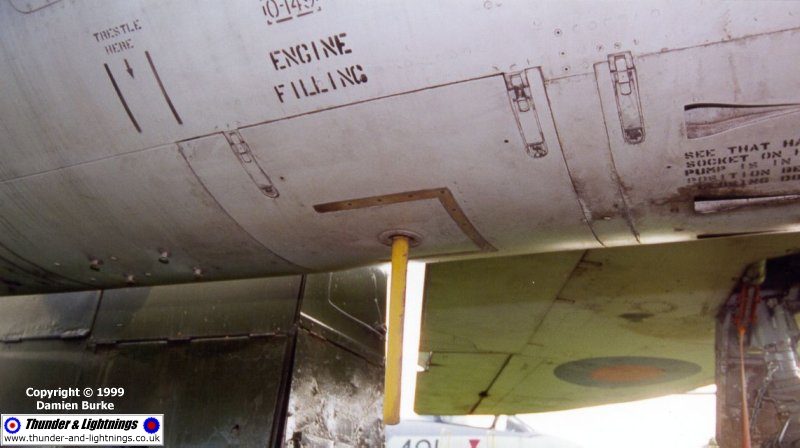
- Closeup of the yellow aerial visible in the previous shot, possibly part of the navigational system.
- Further proof that the fuselage sides are pretty much symmetrical.
- XL603 at Bruntingthorpe. The nose might be non-standard, but this bit of the fuselage is pretty similar
to normal Hunters. Drooped flaps can be seen at lower right.
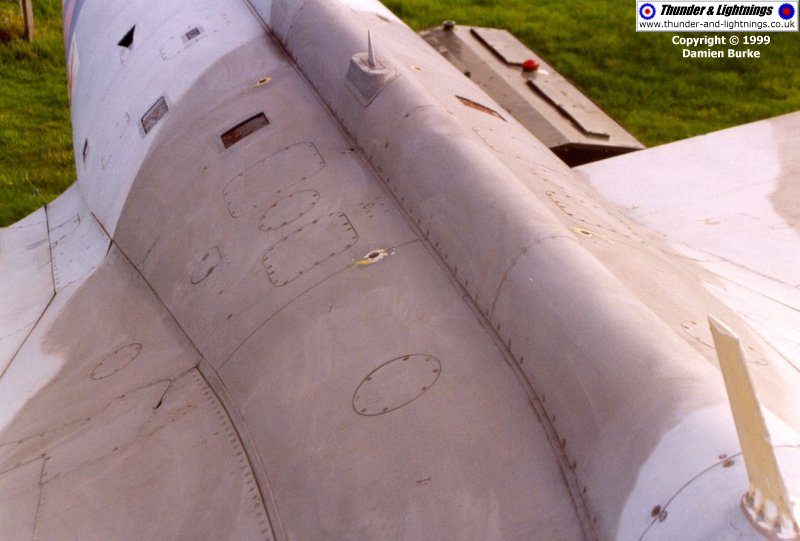
- Back to XF382, looking down onto the starboard mid-fuselage; much the same as the port side with a similar
arrangement of cooling louvres and intakes, but an offset aerial on a plinth is noteworthy.
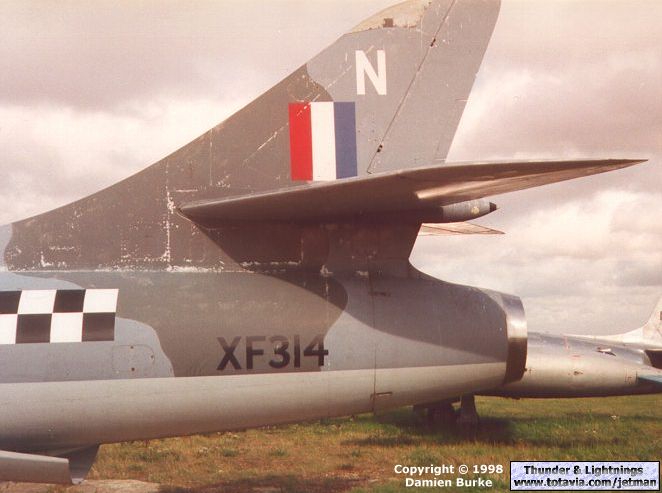
- F.51 'XF314' at Tangmere. Early marks of the Hunter had no brake chute, and hence no fairing
above the jetpipe to take the parachute pack.
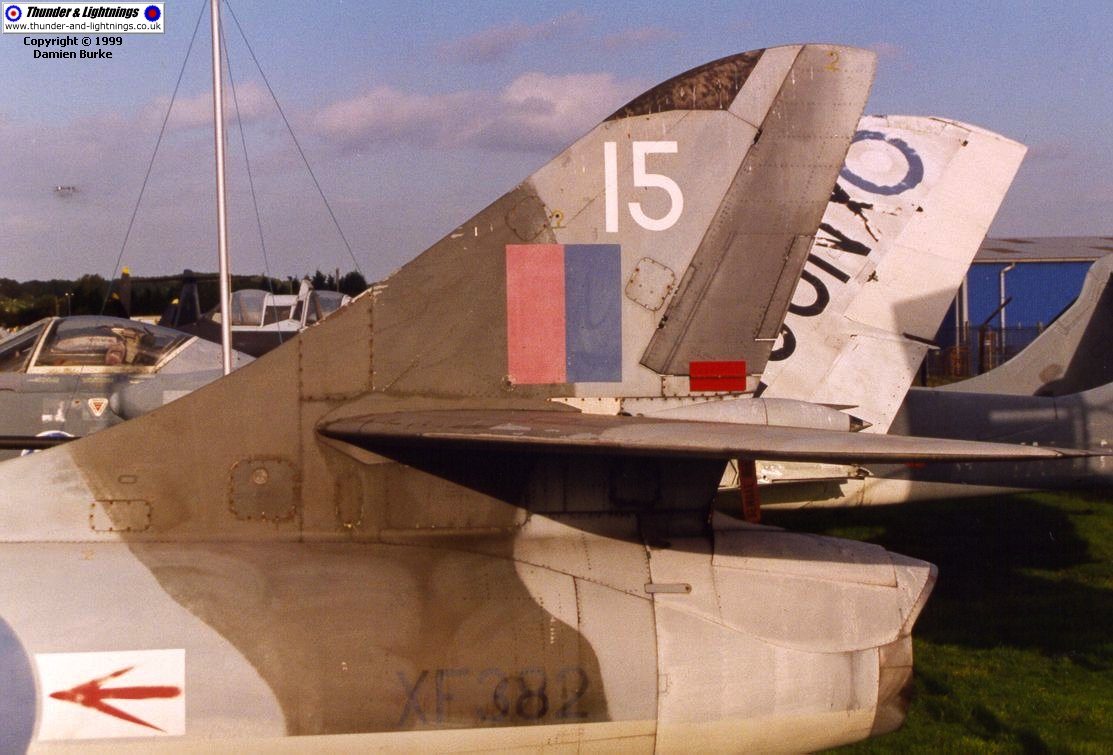
- A bit weather-worn, this Hunter, but it does show the panel lines off well! Note the red rudder lock. The brake parachute fairing over the engine was added to F.6s as part of the F.6A conversion; it's obvious this particular one is from another Hunter judging by the difference in the paint demarcation line.
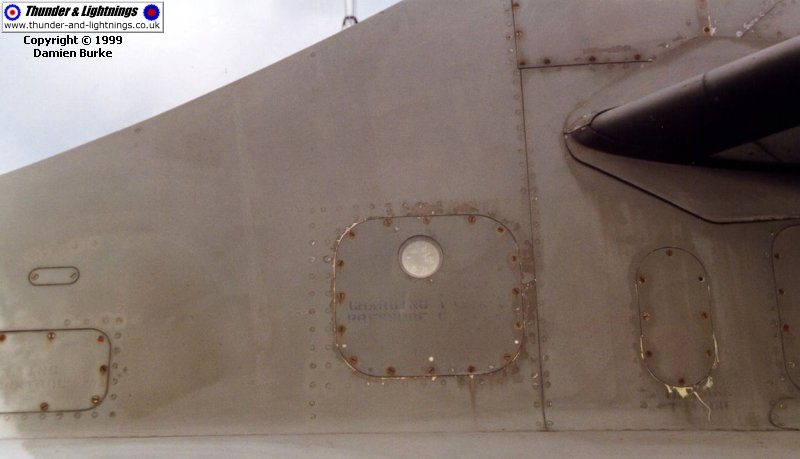
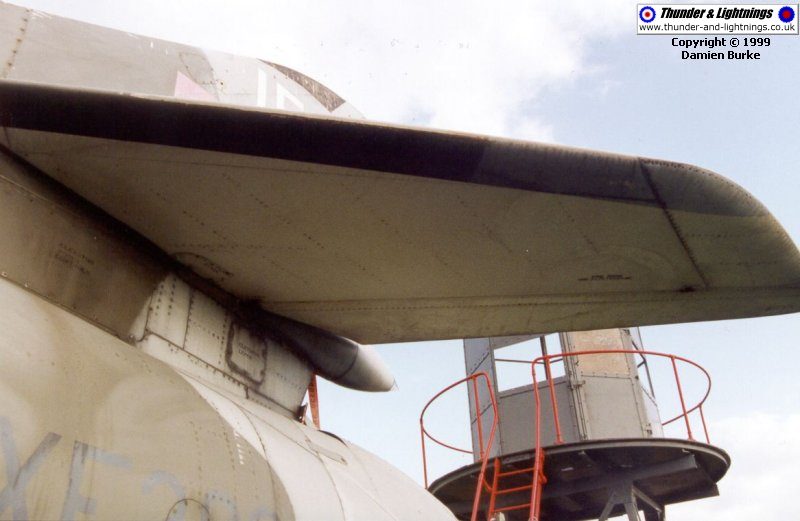
- The elevator hydraulic accumulator gauge is to be found on the port side of the fin (this one belonging
to XF382). Also note the fairly large swash plates around the tailplane, to keep the fin innards covered
when the tailplane incidence is changed.
- Good view of the camouflage demarcation under the tailplane.
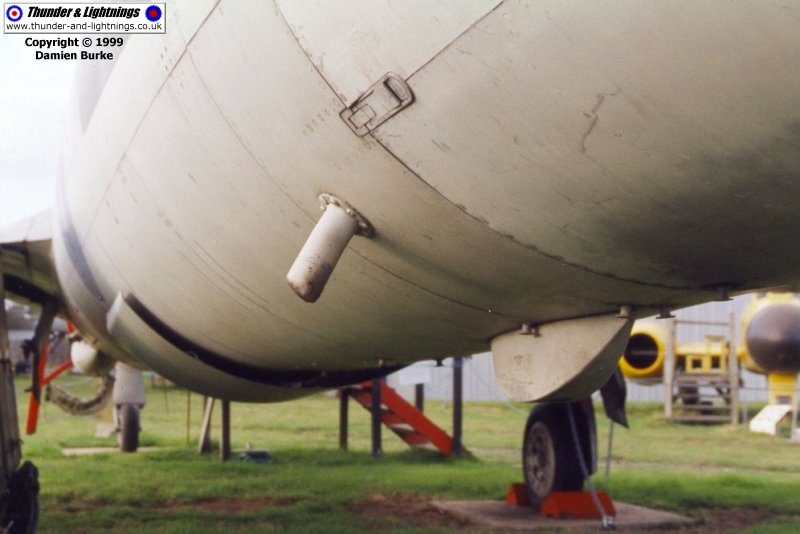
- Closeup of the fuel dump pipe and tail bumper. What look like loose screws are actually drains.
The airbrake is not quite closed which normally indicates the beginning of hydraulic pressure loss.
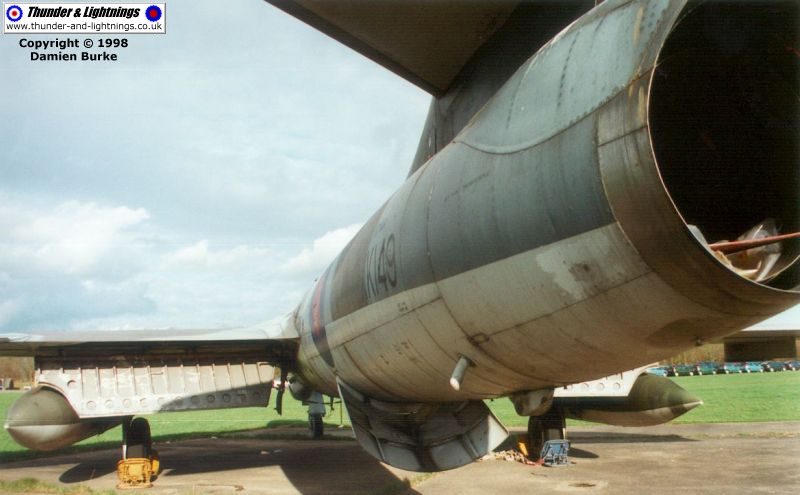
- F.6A XK149 at Bruntingthorpe. Very much a standard Hunter rear fuselage with no arrestor hook.
Drooped flaps very obvious, and note the cutout to clear the drop tank.
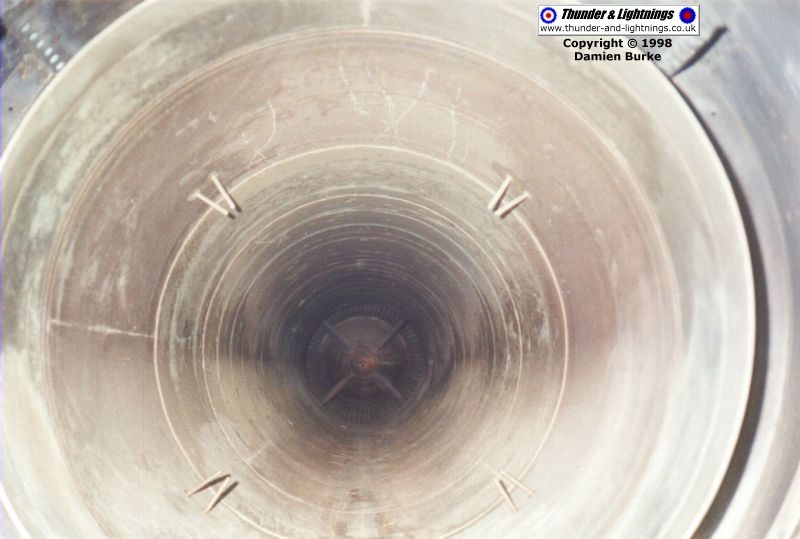
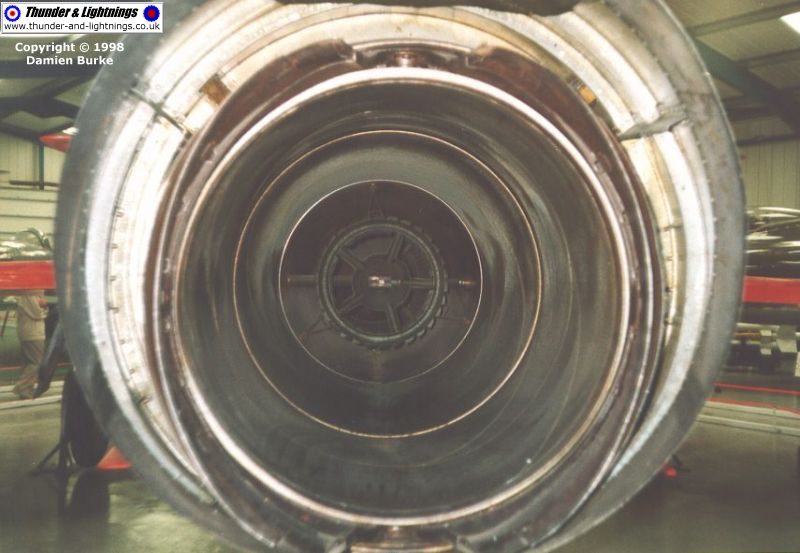
- Peering into the tailpipe of F.6A XF382 at Coventry for a look at the Avon's rear face.
The eight spikes are temperature probes. As you can see there's quite a distance between the rear
face of the engine and the end of the aircraft - no doubt this wasted space contributed to the
Hunter's lack of range, even with fuel tanks wrapped around the jetpipe!
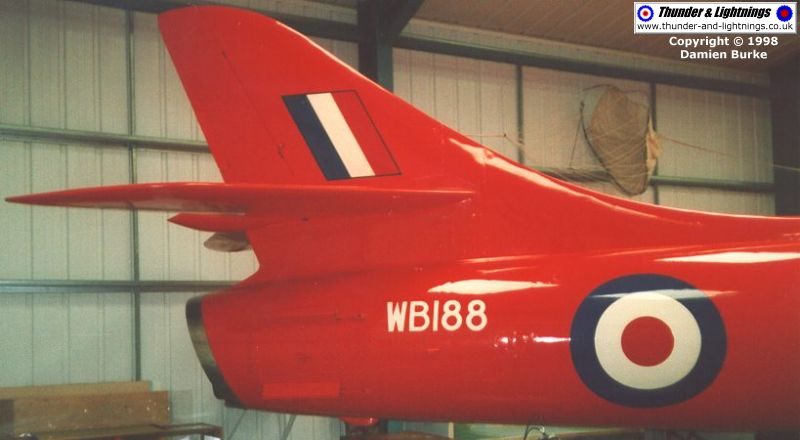
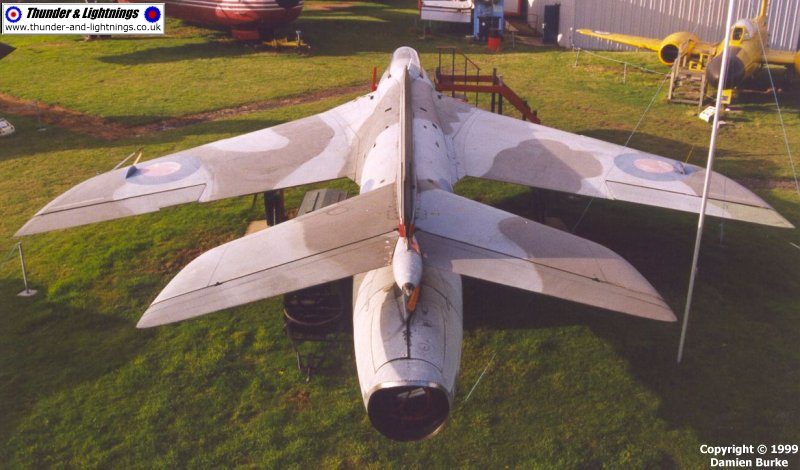
- Another business end shot - looking rather different, because this is WB188 and she has an afterburner!
- WB188 again, as if you couldn't guess! WB188's nose and canopy weren't the only unusual parts
of the aircraft - as you can see here the airbrake isn't on the bottom of the fuselage, instead there
are two, one either side of the jetpipe.
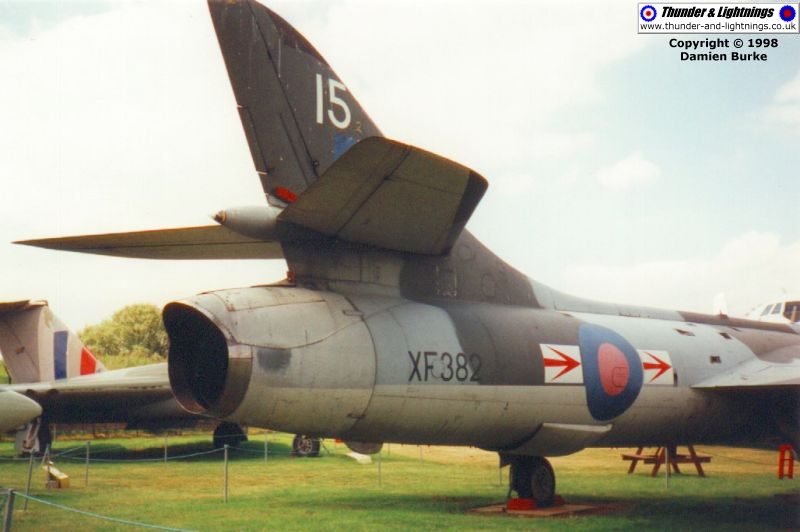
- XF382 once more. Note the airbrake is closed - this is the normal situation for a parked Hunter,
unless it's lost hydraulic pressure, in which case the airbrake slowly opens. It won't be fully open for
a long time, so a model with one fully open is only going to represent a museum exhibit or a
Hunter undergoing maintenance! But how come this museum piece has it closed, I
hear you ask? Well actually there's an iron bar holding it in place. :-)
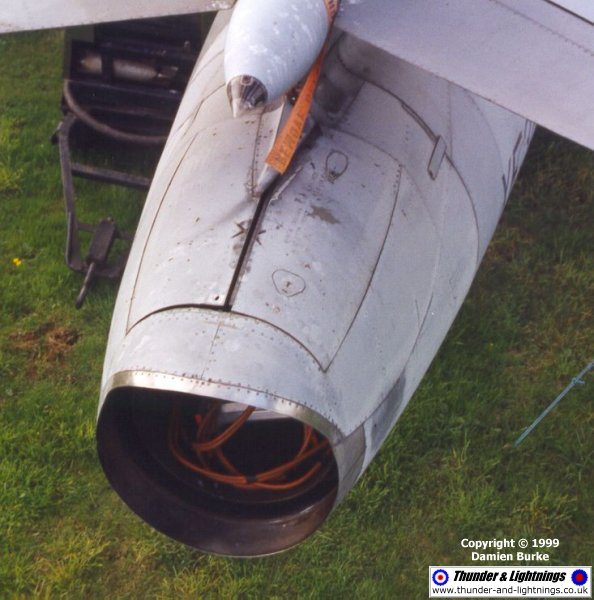
- Closeup of the upper tailcone and brake chute doors. The doors are normally tightly shut, or fully
open - not somewhere in between.
- Distorted by the lense used, but still a useful shot for camouflage layout etc.
- Further aft the fuselage is still much the same as the other side. Note the small tail bumper
and that on this side of the fin there is no small gauge to be seen.
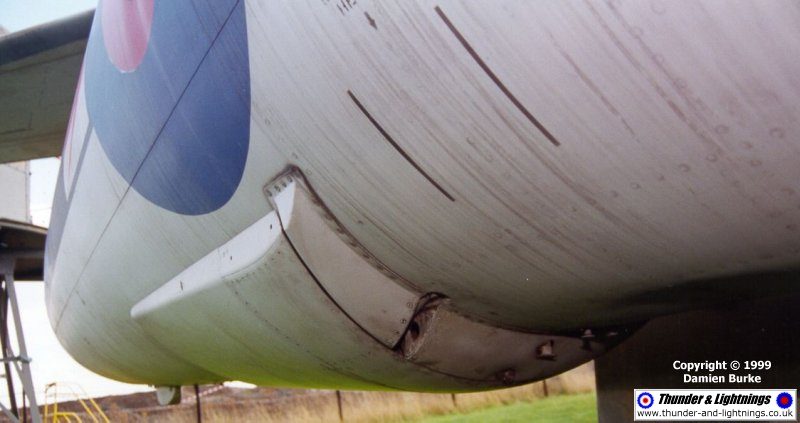
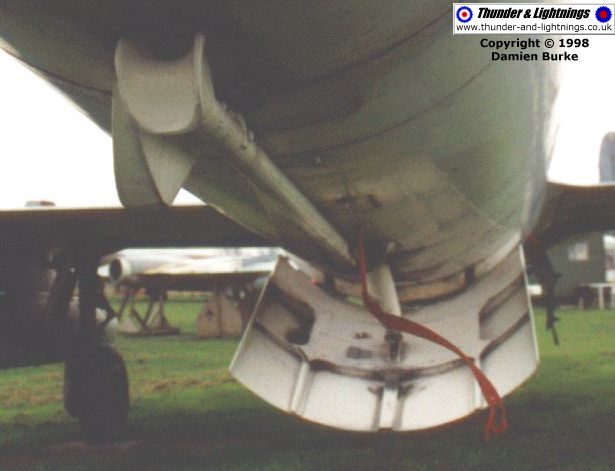
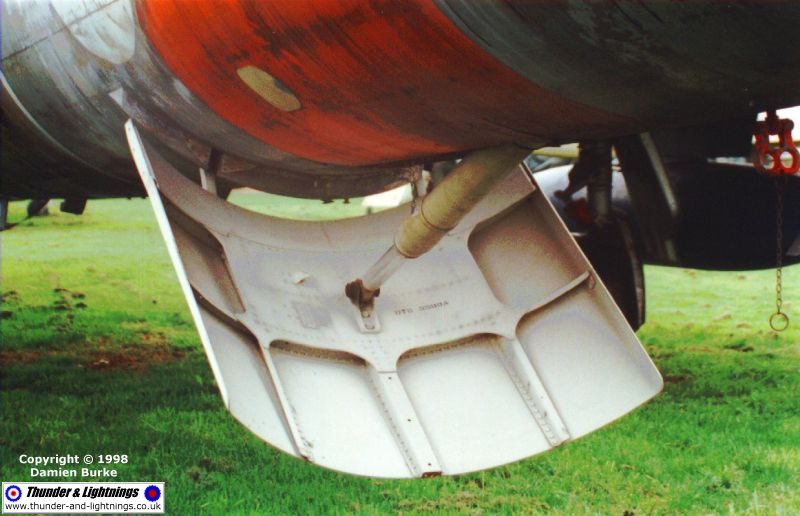
- The airbrake fairing isn't as smooth as you'd expect and is basically a triangular wedge.
- A somewhat distorted look under the starboard tailplane. The rear part of the anti-buffet acorn
fairing is a navigation light.
[Back to top]
All these pages and 'author' credited images copyright © 1997-2007 Handmade by Machine Ltd.